

Temperature Controlled Soldering Tips
Temperature controlled soldering tips are an essential part of modern soldering equipment, widely used in electronics repair, circuit assembly, and precision manufacturing. Unlike traditional soldering irons that heat continuously at a fixed output, temperature controlled soldering tools allow users to maintain a stable and accurate working temperature. This helps improve soldering quality, protect delicate components, and extend the life of the tip itself.One of the main advantages of temperature controlled soldering tips is consistency. During soldering, the tip must stay within a suitable temperature range to ensure solder melts properly and flows smoothly onto joints. If the temperature is too low, solder may not bond well, leading to weak or unreliable connections. If the temperature is too high, it can damage circuit boards, burn components, and create unnecessary oxidation on the tip. A temperature controlled system reduces these risks by keeping the soldering tip at the desired level with minimal fluctuation.These soldering tips are especially useful in electronics work, where components are often small, sensitive, and densely packed. Modern devices such as smartphones, computers, and control boards require careful heat management. A stable soldering temperature allows technicians to work more accurately and efficiently. It also helps avoid overheating nearby parts, which is important when repairing fine-pitch components or working on multilayer printed circuit boards.Another benefit is improved tip durability. Excessive heat can rapidly wear down soldering tips by causing oxidation and corrosion. With proper temperature control, the tip experiences less thermal stress and lasts longer. This reduces replacement frequency and helps maintain better performance over time. In addition, many temperature controlled soldering systems include automatic standby or sleep modes, which further protect the tip when the tool is not in active use.Temperature controlled soldering tips also support better user comfort and productivity. Because the temperature is regulated, users do not need to constantly adjust or compensate for heat loss during work. This makes soldering easier, especially during long tasks or repetitive operations. It can also reduce fatigue, as the user spends less time correcting poor solder flow or reworking faulty joints.Different soldering applications may require different tip shapes and sizes. Fine conical tips are often used for detailed electronic work, while chisel tips are suitable for larger joints and wire connections. Temperature control works with these various tip styles, making the equipment versatile for many tasks. Whether used for repair, prototyping, or industrial assembly, the ability to match the right tip with the right temperature is a major advantage.In conclusion, temperature controlled soldering tips provide precision, reliability, and efficiency. They help create strong solder joints, protect sensitive parts, and increase the lifespan of the tool. For anyone working with electronics or metal joining tasks, they are a valuable solution that supports both quality and safety.
Products
Category:
-
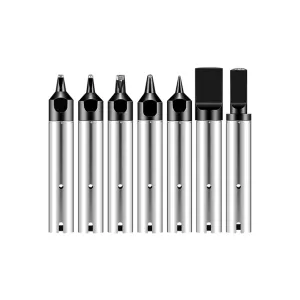
CHUERA-911G High-Frequency Temperature Controlled Soldering Iron Tips
Category: Automated Soldering AccessoriesBrowse number: 27Number:Release time: 2026-06-27 11:25:15The 911G High-Frequency Temperature Controlled Soldering Iron Tips are high-performance soldering consumables designed for automatic soldering machines and industrial electronic manufacturing. These tips are engineered with high-purity oxygen-free copper as the core material, combined with advanced electroplating technology to ensure fast thermal response, stable temperature control, and long service life under continuous production conditions.
News
Category:
No search results found!
Case
Category:
No search results found!
Video
Category:
No search results found!
Download
Category:
No search results found!
Job
Category:
No search results found!
Featured Products
No search results found!



 Phone
Phone