

Industrial Static Control
Industrial static control refers to the methods, tools, and procedures used to prevent, reduce, and safely manage the buildup of electrostatic charge in manufacturing, processing, assembly, packaging, and material-handling environments. In many industrial settings, static electricity is more than a minor nuisance. It can attract dust and contaminants, damage sensitive electronic components, cause product defects, interfere with automated equipment, create uncomfortable shocks for workers, and in some cases pose a serious fire or explosion risk. For this reason, static control is an essential part of quality assurance, safety management, and process stability.Static charges are generated when two materials come into contact and then separate, especially when one or both are insulating or semi-insulating. Common sources include moving films, conveyor belts, paper handling, plastic parts, textiles, powders, and fast air flow. Because industrial processes often involve high-speed movement and low-humidity conditions, static accumulation can become significant very quickly. Effective control begins with identifying where charge is being created, how it spreads, and which products or operations are most sensitive to its effects.A complete static control strategy usually combines several approaches. One important method is grounding and bonding, which provides a safe path for charge to dissipate from conductive equipment, containers, and work surfaces. However, grounding alone is not enough for insulating materials, so ionization is often used as well. Ionizing devices neutralize static charges on surfaces by releasing balanced positive and negative ions into the air. These devices are especially useful for plastics, films, and other materials that cannot be directly grounded.Humidity control is another valuable technique. Slightly higher relative humidity can reduce charge generation by making surfaces less resistive, although it is not always practical or sufficient on its own. Anti-static materials, coatings, mats, brushes, and packaging are also widely used to minimize charge buildup and protect products during storage and transport. In addition, proper process design can reduce friction, limit unnecessary material contact, and improve machine speeds and material flow to lower the chance of charging.Worker protection is also a key part of industrial static control. Personnel may wear conductive footwear, wrist straps, or specialized clothing in sensitive areas. Floors, tables, and carts may be made from static-dissipative materials. Regular inspection and testing are important to ensure that all control measures remain effective over time. Maintenance teams often monitor ionization performance, verify grounding connections, and check environmental conditions to keep static levels within acceptable limits.Industrial static control supports product quality, operational reliability, and workplace safety. In electronics, it helps prevent hidden damage to microchips and assemblies. In printing, packaging, and plastics, it improves handling and appearance. In chemical and powder-processing industries, it helps reduce ignition hazards. As production becomes faster and more automated, managing static electricity becomes even more important. A well-designed static control program not only protects materials and equipment but also improves consistency, reduces downtime, and supports safer, cleaner, and more efficient manufacturing.
Products
Category:
Smart Soldering Equipment
-
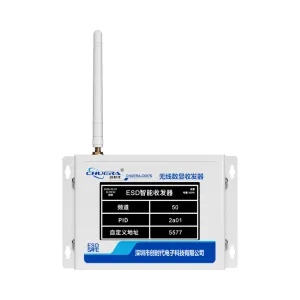
CHUERA-607A/607D/607S Wireless Data Transceiver Gateway
Category: ESD Protection and ControlBrowse number: 27Number:Release time: 2026-09-07 15:22:30The CHUERA-607A/607D/607S Wireless Data Transceiver Gateway connects Ethernet networks with LoRa or ZigBee wireless networks for reliable data transmission and device management. It supports CHUERA wireless ESD, temperature, humidity and environmental monitoring devices, with local data storage, signal display, online upgrades, and PC or mobile app management.
News
Category:
-
[industry news]Intelligent Networked Ion Fans for Industrial Static Elimina...
2023-09-01 11:46:04 -
[Company News]Advanced Smart Anti-Static Tools for Industrial Production
2026-06-10 17:27:11
Case
Category:

Video
Category:
No search results found!
Download
Category:
No search results found!
Job
Category:
No search results found!
Featured Products
No search results found!



 Phone
Phone