

static eliminator
A static eliminator is a device designed to reduce or remove static electricity from materials, surfaces, or environments. Static electricity can build up when two objects rub against each other or separate, especially in industrial processes involving plastic, paper, textiles, film, printing, packaging, and electronics. If left uncontrolled, static charge can cause dust attraction, product defects, electric shocks, equipment malfunction, and in some cases even ignition risks in sensitive environments. A static eliminator helps solve these problems by neutralizing charged surfaces and restoring stable operating conditions.The basic working principle of a static eliminator is ionization. It generates positive and negative ions and directs them toward a charged surface. When the ions reach the material, they combine with the opposite charge on the surface and cancel it out. This process quickly lowers the static voltage, making the material safer and easier to handle. Depending on the application, a static eliminator may be passive or active. Passive types rely on grounding and conductive paths, while active types use power sources such as high voltage or compressed air to create ions more effectively.Static eliminators are widely used in production lines where materials move at high speed. For example, during film unwinding or winding, static charge can cause sheets to cling together, wrinkle, or attract particles. In printing, static may affect registration and print quality. In packaging, it can make plastic film difficult to separate or control. In electronic manufacturing, static discharge can damage sensitive components. By installing a static eliminator near the point where charge is generated, operators can greatly improve process stability and product quality.There are several common forms of static eliminators. Bar-type eliminators are mounted close to the target surface and are suitable for continuous processes. Air-assisted models use a flow of ionized air to reach farther or cover wider areas. Compact units are used for localized applications, while larger systems can protect entire workstations or production zones. The choice of model depends on the material type, line speed, distance to the charged object, and environmental conditions.A good static eliminator should have fast neutralization performance, stable operation, easy installation, and low maintenance requirements. It should work reliably in different humidity and temperature conditions and provide consistent ion balance. Proper positioning is also important, because the distance and angle between the eliminator and the target surface affect the result.Overall, a static eliminator is an important tool for controlling static electricity in modern industry. It improves safety, product quality, and production efficiency while reducing downtime and defects.
Products
Category:
-
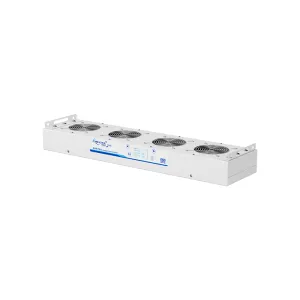
CHUERA-2200D Intelligent High-Frequency Ionizing Air Blower
Category: ESD Protection and ControlBrowse number: 66Number:Release time: 2026-05-30 07:53:16The CSD-2200D Intelligent High-Frequency Ionizing Air Blower is a professional static elimination solution designed for ESD-sensitive manufacturing environments. Utilizing advanced high-frequency ionization technology, the system rapidly neutralizes static charges on product surfaces, workstations, and production equipment, helping manufacturers reduce electrostatic damage and improve product quality.
News
Category:
No search results found!
Case
Category:
No search results found!
Video
Category:
No search results found!
Download
Category:
No search results found!
Job
Category:
No search results found!
Featured Products
-
NEWS
CHUERA-2200D Intelligent High-Frequency Ionizing Air Blower
Learn more



 Phone
Phone